
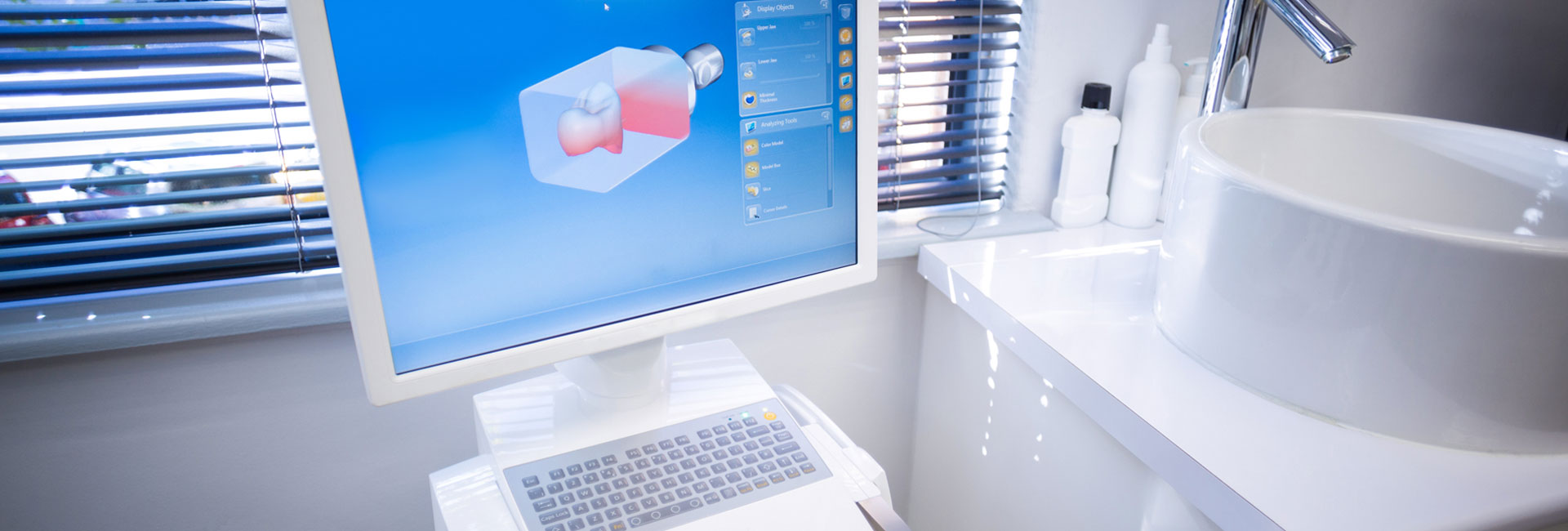
Experience the Comfort, Speed, and Efficiency of a 3D iTero Scanner
Elevation Dental Studio uses the latest technology to help patients achieve comfortable, fast, and precise dentistry. Dr. MitzAnn Edmond is well-experienced in modern dentistry. She offers a 3D iTero scanner for improved diagnostics and treatments, among other dental technologies.
Want to see what an iTero intraoral scanner can do for your smile? Please schedule an appointment with our Mt. Vernon, New York office to experience the benefits of this advanced technology.
What is a 3D iTero Scanner?
It’s a piece of technology that captures thousands of images of your mouth and then assembles them to create a detailed and accurate 3D image of your teeth, gums, and other oral structures. A 3D rendering of your mouth allows the dentist to view every aspect of your dentition and meticulously plan every step of your treatment.
Although digital impressions have been around since the 1980s, they have undergone significant advancements to create superior scanners. Modern digital scanners use a small handheld wand to take thousands of images of your mouth using low-radiation lasers.
The dentist moves the comfortable wand around the mouth to capture an entire scan of your mouth. As the dentist scans your mouth, a 3D model of your mouth gradually displays on a screen to help visualize your smile in real-time.
Benefits of a 3D iTero scanner
An intraoral 3D scanner is designed to support optimal workflow with the Invisalign® system and other procedures. These are the many benefits of the iTero scanning technology.
- Comfort: Traditionally, dentists used to take bite impressions by asking patients to bite into a tray of gooey material. Now, you only need to open your mouth and let a small, comfortable wand do the work. iTero dental scanning is easy and comfortable.
- Speed: 3D scanning, which produces highly detailed and precise images, may appear to be a time-consuming process. However, it takes much less time than you might think! The entire scanning process takes about 10 minutes, leading to faster appointment times.
- Better results: Digital scanning creates detailed and accurate images, resulting in superior restorations.
- Transparency: An iTero 3D scanner reveals the expected results even before starting the actual treatment. This way, you have a hint of the outcome before you commit to treatment.
Are you curious to learn more about an iTero 3D scanner? Please call (914) 252-3238 to schedule an appointment with Dr. MitzAnn Edmond for more information.
Frequently Asked Questions About iTero 3D Digital Scan
How is a 3D digital scan different from traditional dental impressions?
Instead of biting into impression material, a digital scan uses a handheld device to capture detailed images of your teeth and gums. These images are combined into a precise 3D model. This method avoids mess and discomfort while providing highly accurate data that improves planning and the fit of restorations or appliances.
Is the scanning process safe for all patients?
Yes, digital scanning is considered very safe. It does not rely on traditional radiation-based imaging for impressions and instead uses light-based technology to capture images. This makes it suitable for a wide range of patients, including those who may be sensitive to conventional methods or looking for a more comfortable alternative.
How long does a digital scan usually take?
The scanning process typically takes just a few minutes. The handheld device is moved around your mouth to capture images from different angles. Because the results appear almost instantly on a screen, there is no waiting for materials to set or impressions to be processed, making the appointment more efficient overall.
Will I feel any discomfort during the scan?
Most patients find the experience very comfortable. The device is small and smooth, and it simply glides over the teeth to collect images. There is no pressure from trays or materials, which can be especially helpful for individuals with a sensitive gag reflex or those who feel uneasy during traditional impressions.
What types of treatments benefit from digital scanning?
Digital scans are used in many areas of dentistry, including orthodontic planning, restorative treatments, and appliance fabrication. The detailed images help ensure a better fit for crowns, aligners, and other devices. This level of precision supports more predictable outcomes across a wide range of procedures.
Can I see my teeth during the scanning process?
Yes, one advantage of this technology is that it allows you to view a real-time 3D model of your mouth as it is being created. This visual feedback can help you better understand your dental condition and any recommended treatments, making the process more engaging and informative.
Does digital scanning improve the accuracy of dental work?
Highly detailed imaging enables more precise measurements than traditional impressions. This accuracy can lead to better-fitting restorations and appliances, reducing the need for adjustments or remakes. Improved precision also helps streamline communication between the dental office and the lab that creates your restorations.
Is digital scanning useful for monitoring changes over time?
Yes, scans can be stored and compared over time to track subtle changes in your teeth and gums. This is especially helpful for monitoring orthodontic progress or identifying gradual wear and movement. Having a digital record allows your dentist to make more informed decisions about your ongoing care.
Can digital scans help me preview treatment results?
In many cases, digital models can be used to simulate potential outcomes before treatment begins. This allows you to visualize expected changes and better understand your options. Seeing a projected result can make it easier to feel confident about moving forward with a recommended treatment plan.
Will I still need traditional impressions after a digital scan?
In most situations, digital scans replace the need for traditional impressions entirely. However, there may be rare cases where additional records are required. Your dentist will determine what is necessary based on the type of treatment you are receiving, but digital scanning often simplifies the process significantly.

